

Lemon Squeezy
Screenshots
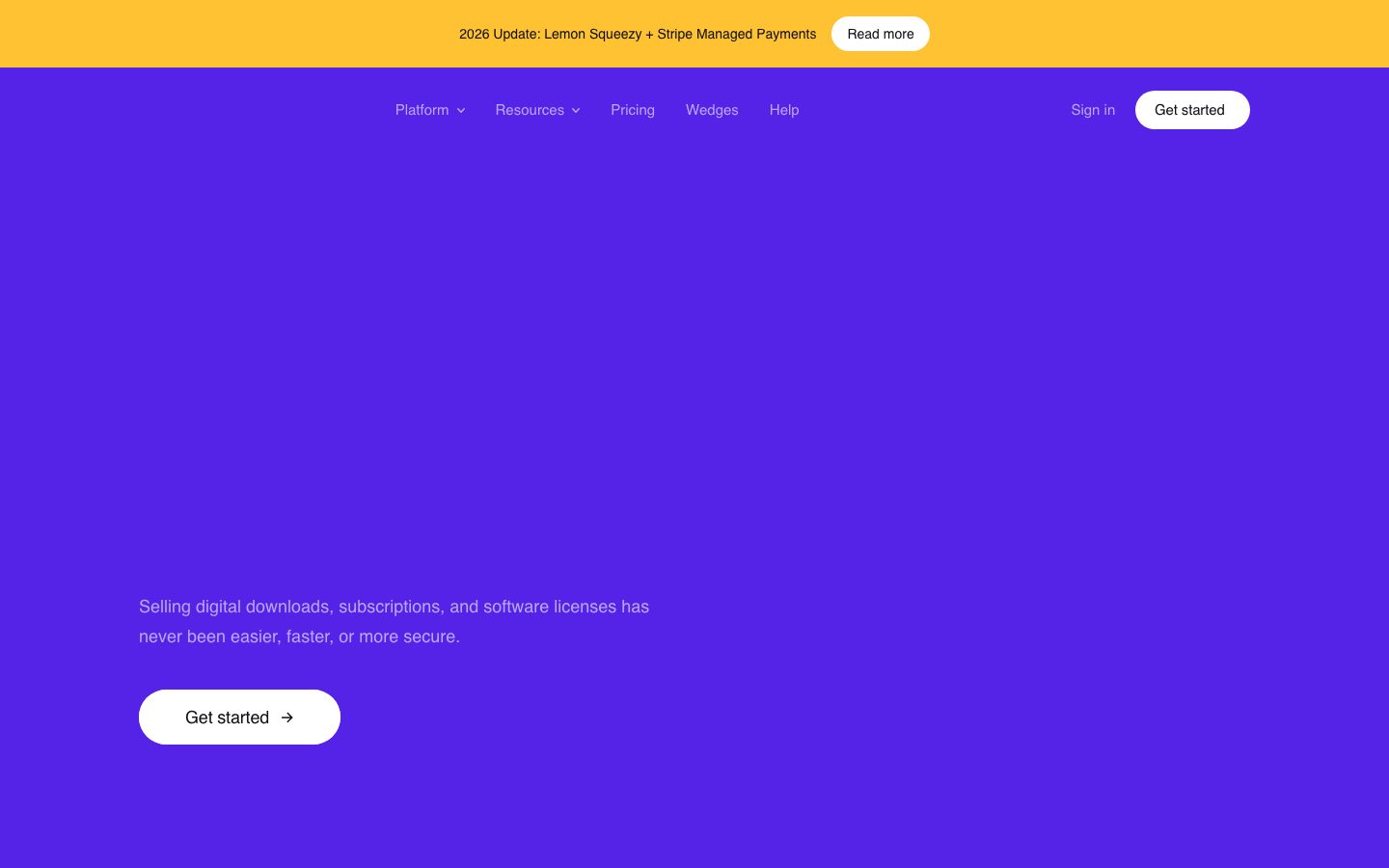 1 / 2
1 / 2The Story
Lemon Squeezy is a payments platform for software businesses that acts as the merchant of record. That means the company is the legal seller of record for each transaction, and it takes on the obligations that follow: sales tax and VAT registration, collection, and remittance in the jurisdictions where a customer buys.
For a small software business selling internationally, that is the whole proposition. Instead of registering for VAT in the EU, the UK, and elsewhere as revenue grows, the seller handles one counterparty. The platform provides checkout, licence keys, subscription management, and a customer portal, and it pays out on a schedule.
The cost is a higher percentage per transaction than a plain payment processor, because the merchant-of-record role absorbs tax and compliance work. Businesses with high volume sometimes move to a processor and handle tax themselves once the fee difference exceeds the cost of doing so.
Overview
The merchant-of-record model is the product: the platform becomes the seller of record, and the tax obligations move with it.
When a customer buys through Lemon Squeezy, the platform is the legal seller. That single fact removes the requirement for the software business to register for VAT or sales tax in each jurisdiction where it has customers, because those obligations belong to the merchant of record. For a small team selling worldwide, this is the difference between launching and spending months on registrations.
The surrounding features cover what a software seller needs: hosted checkout, subscription management with upgrades and cancellations, licence key generation and validation, and a customer portal where buyers manage their own subscription. Payouts arrive on a schedule rather than per transaction.
The percentage per transaction is higher than a plain processor, because the fee covers tax collection and remittance rather than only moving money. At higher volume the difference becomes significant, and businesses sometimes migrate to a processor and take on tax compliance themselves once the cost of doing so is lower.
Key Features
- Merchant of record
The platform is the legal seller for each transaction, so international sales tax and VAT obligations sit with it rather than with the business.
- Licence keys
Keys are generated and validated through the platform, which covers the activation flow software products need.
- Subscription management
Upgrades, downgrades, cancellations, and dunning are handled, with a customer portal for self-service.
- Hosted checkout
Checkout is hosted and localised, so the seller does not build or maintain a payment form.
Where Lemon Squeezy is a strong choice, and where it is not
Choose Lemon Squeezy when a small software business sells internationally and would rather not register for VAT and sales tax in every jurisdiction where it has customers.
Look elsewhere if transaction volume is high enough that the merchant-of-record fee exceeds the cost of handling tax directly, or if the business model does not fit a software-licence and subscription shape.
Getting started
A checkout link works the same day; the appeal is what you do not have to register for.
- ~1 hourTime to first sale
Create a product and share the hosted checkout. No payment infrastructure to build.
- Per transactionCost to start
No monthly fee. A percentage per transaction covers tax collection and remittance.
- A productPrerequisites
Something to sell. No tax registration is required before selling internationally.
Known limitations
Constraints confirmed from the platform's documentation.
- The fee is higher than a plain processor. The merchant-of-record role absorbs tax work, and that shows up in the percentage.
- You are not the merchant of record. The platform is the legal seller, which affects branding and customer relationships.
- Payouts are on a schedule, not immediate, which matters for cash flow.
- Less control over checkout. The hosted flow is localised and reliable, and not fully customisable.
Pick Lemon Squeezy when tax compliance is the blocker
It removes the requirement to register for VAT and sales tax in every jurisdiction where you have customers.
For a small software business selling internationally, that is the whole proposition: one counterparty instead of a growing list of registrations.
At higher volume the fee becomes significant, and businesses sometimes migrate to a processor and handle tax themselves once that is cheaper.
FAQ
What is Lemon Squeezy?
Lemon Squeezy is a payments platform for software sellers that acts as merchant of record, handling international sales tax and VAT.
Is Lemon Squeezy free?
There is no monthly platform fee; the platform charges a percentage per transaction that covers tax collection and remittance.
What does merchant of record mean?
It means the platform is the legal seller for each transaction, so the tax registration and remittance obligations belong to it rather than to the software business.
Does it generate licence keys?
Yes. Licence keys can be generated and validated through the platform's API.
What stack is Lemon Squeezy built with?
CompassPad records Lemon Squeezy as a Laravel and PHP application with a TypeScript frontend, based on public documentation and job listings.
What we checked
- LIVESite and primary link
The marketing site resolved and the primary product link reached the application.
- PRICINGPricing page
The pricing page resolved and lists a per-transaction fee structure rather than a subscription.
- DOCSDocumentation
Documentation is public and covers checkout, subscriptions, licence keys, and the API.
- FRESHNESSChangelog
A dated public blog is published and reachable without an account.
Discussion
No comments yet. Be the first.
Join the conversation. Sign up to comment.
Sign up free