

Directus
Screenshots
 1 / 2
1 / 2The Story
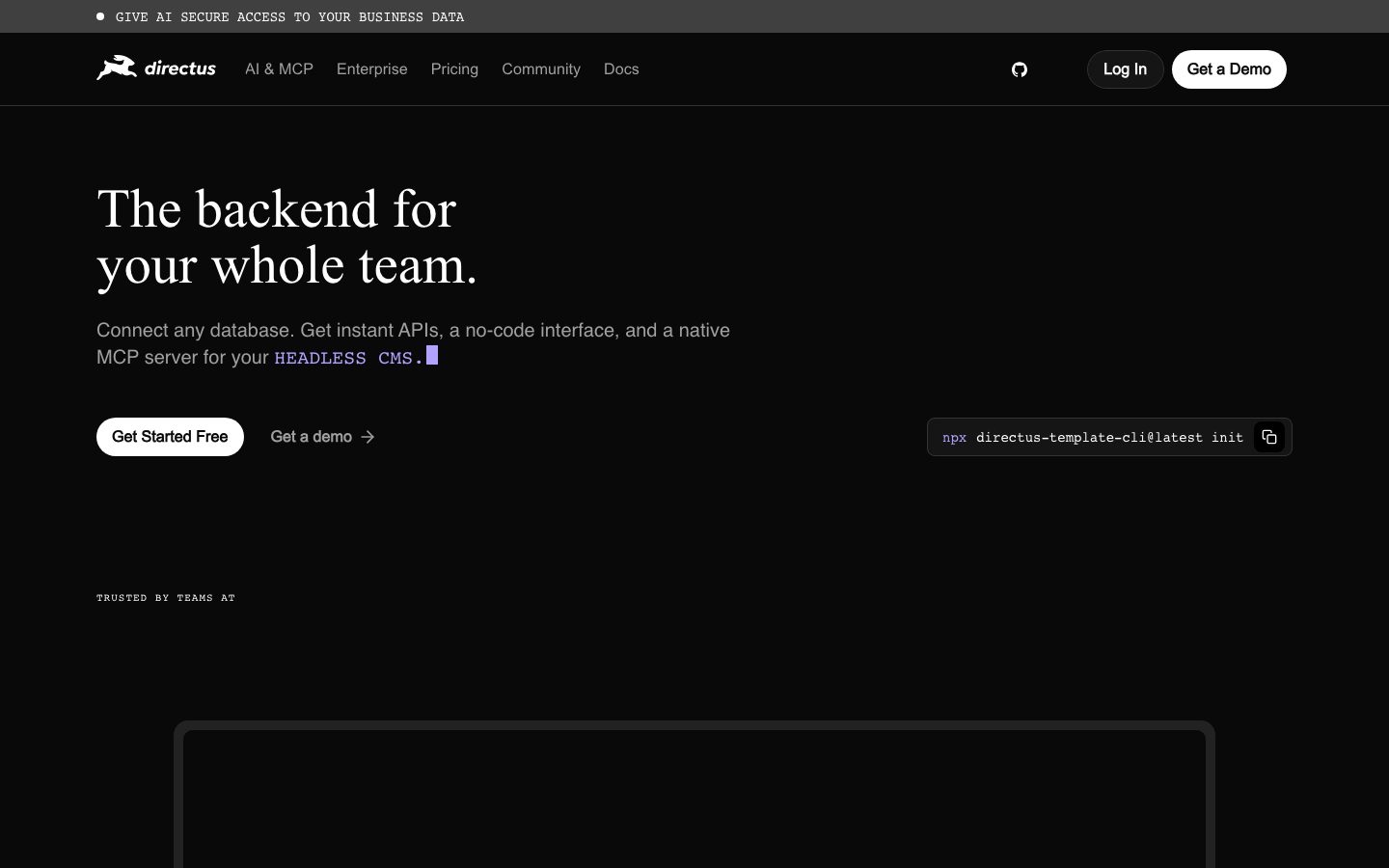
Directus is a layer that sits on top of an existing SQL database rather than replacing it. Point it at a database and it introspects the schema, then generates a REST and GraphQL API plus an admin application for the tables it finds. The database remains the source of truth.
That inversion is the main difference from a conventional CMS. Content is not locked in an application-specific structure: the tables are ordinary SQL tables, readable by other tools and migrations. Custom fields, relations, and permissions are configured in Directus and stored in the same database, so a DBA can still work with the schema directly.
The product is open source and self-hostable, with a paid cloud offering. It fits teams that already have a database and want an admin interface and API over it without migrating. It is a weaker fit when the schema is expected to change constantly, since the database is the contract.
Overview
Directus' inversion is that it adapts to an existing schema rather than requiring the data to be modelled inside the application.
Point Directus at a SQL database and it reads the schema. Every table becomes a collection, every column a field, and the platform generates a REST and GraphQL API plus an admin interface over them. There is no import step and no second copy of the data, so the database remains the thing other services and migrations operate on.
Configuration lives in the same database. Field presentation, relations, roles, and permissions are stored in dedicated tables, which means the setup is portable and a DBA can still inspect the schema directly. Custom endpoints and hooks extend the API in code.
The product is open source and self-hostable, with a paid cloud offering. It fits a team that already has a database and wants an admin layer and API without migrating. It is a weaker fit when the schema churns constantly, because the database is the contract every other consumer depends on.
Key Features
- Database introspection
An existing SQL schema becomes collections and fields without an import or a second copy of the data.
- Generated REST and GraphQL APIs
Both API surfaces are produced from the schema, so a frontend can consume the data immediately.
- Roles and permissions
Field-level access rules are configured per role, which covers the access control a back office needs.
- Extensible in code
Custom endpoints, hooks, and interface extensions let the platform fit a specific operation.
Where Directus is a strong choice, and where it is not
Choose Directus when a SQL database already exists and the missing pieces are an admin interface, an API, and permissions over it.
Look elsewhere if the schema is expected to change frequently or if the team wants a CMS that owns the content model. Directus treats the database as the contract, which is a strength and a constraint.
Getting started
Pointing it at a database is quick; permissions are the work.
- ~15 minTime to first collection
Connect a database and the existing tables appear as collections with generated APIs.
- FreeCost to start
The open-source edition is free to self-host. A paid cloud offering exists.
- An existing databasePrerequisites
A SQL database with tables in it, plus somewhere to run the application.
Known limitations
Constraints confirmed from the project's documentation.
- The database is the contract. A schema change affects every consumer, so churn is expensive.
- Self-hosting means operating it. Backups, upgrades, and availability are yours.
- Configuration lives in the database. That makes it portable and means it travels with your backups.
- Not a content-modelling tool. It adapts to a schema rather than helping you design one.
Pick Directus when a database already exists
It adds an admin interface, APIs, and permissions over the schema you already have, without moving the data.
The differentiator is that the data stays where it is: tables are ordinary SQL that other tools and migrations can still operate on.
If the schema is expected to change constantly, or you want a CMS that owns the content model, this is the wrong shape.
FAQ
What is Directus?
Directus is a data platform that sits on an existing SQL database and generates an admin application plus REST and GraphQL APIs.
Is Directus free?
The core is open source and free to self-host. A paid cloud offering is also available.
Does Directus move my data?
No. It introspects the existing database and leaves the data in place, using the schema as the source of truth.
Can I control access per field?
Yes. Roles carry field-level permission rules that are enforced by the API.
What stack is Directus built with?
CompassPad records Directus as a Node.js and TypeScript backend with a Vue admin application, based on its public repository.
What we checked
- LIVESite and primary link
The marketing site resolved and the primary product link reached the application.
- PRICINGPricing page
The pricing page resolved and lists a free open-source edition alongside a paid cloud offering.
- DOCSDocumentation
Documentation is public and covers architecture, APIs, roles, and extensions.
- FRESHNESSChangelog
A dated public blog publishes releases and is reachable without an account.
Discussion
No comments yet. Be the first.
Join the conversation. Sign up to comment.
Sign up free