Screenshots
 1 / 2
1 / 2The Story
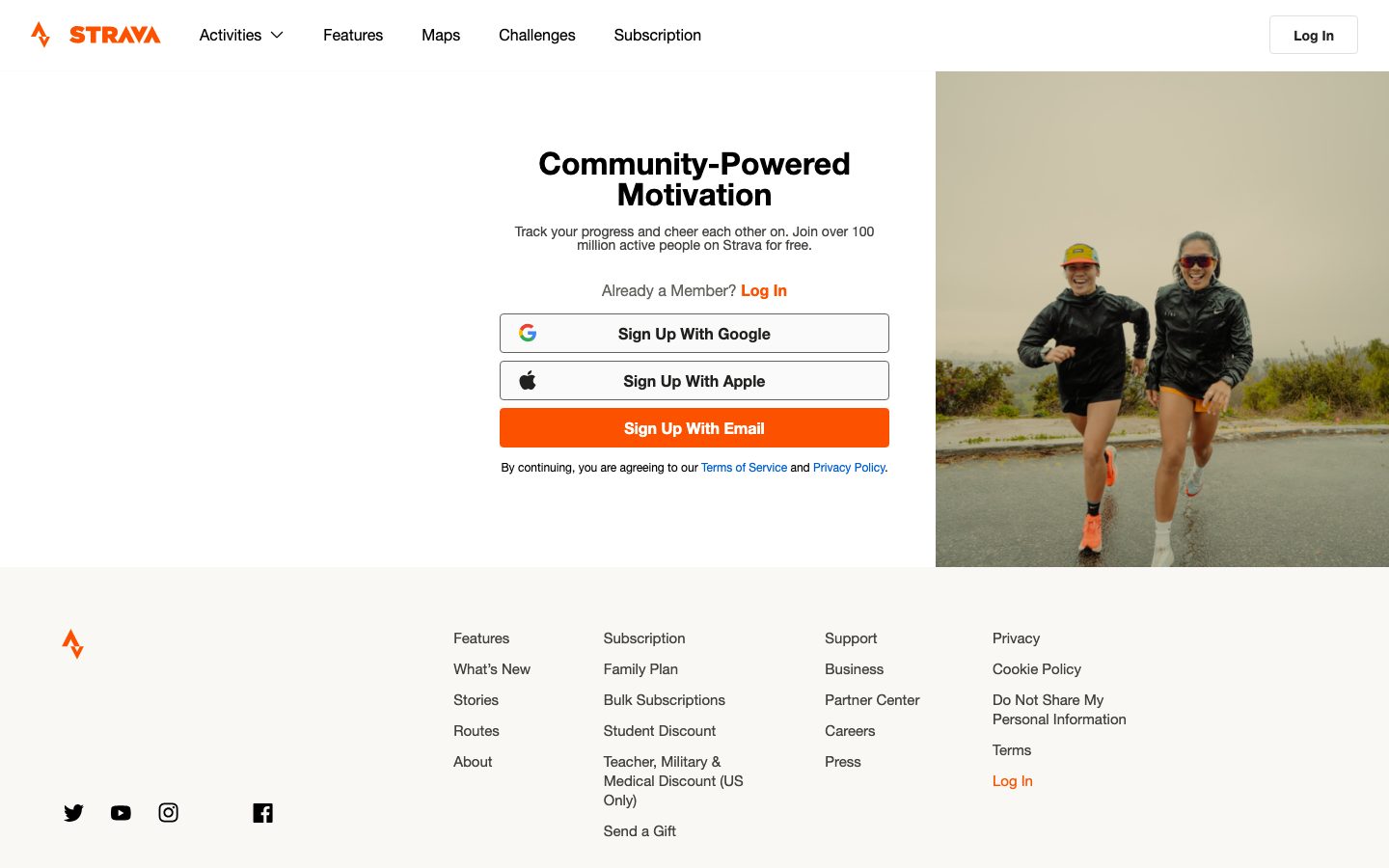
Strava records physical activity from a phone or a GPS watch and turns it into a social feed. The recording itself is table stakes; the product's value is the network, because a segment or a route is meaningful when other people have also ridden or run it.
Segments are the distinctive feature. A stretch of road or trail is defined once, and every activity that passes over it is timed against it, producing a leaderboard. That comparison is what motivates a large part of the user base, and it is the reason the platform has a social layer rather than being a private log.
The social and competitive features are also the source of the product's problems. Privacy is a real concern, since a public activity reveals a route and a time, and the platform has added privacy zones and default settings in response. The full analysis features sit behind a subscription, while recording and the social feed are free.
Overview
Strava's distinctive move was to make recorded activity comparable, which turns a private log into a social product.
An activity is recorded from a phone or a GPS watch and uploaded. On its own that is a personal log. What changes the product is the segment: a defined stretch of road or trail that every passing activity is timed against, producing a leaderboard. A hill becomes a benchmark because other people have also ridden it.
The social layer follows from that. Activities appear in a feed, kudos are given, and a club can track its members. Because comparison is the motivation, the feed is not an add-on but the mechanism that makes the recording worth doing.
That visibility is also the risk. A public activity reveals where a person was and when, and the platform has responded with privacy zones, default visibility settings, and the ability to hide a start or end point. Detailed analysis and route planning sit behind a subscription; recording and the social feed are free.
Key Features
- Activity recording
Runs, rides, and other activities are recorded from a phone or a GPS device and uploaded automatically.
- Segment leaderboards
A defined stretch of road or trail is timed for every passing activity, producing a comparable ranking.
- Social feed and clubs
Activities appear in a feed with kudos, and clubs aggregate a group's activity.
- Privacy zones
Start and end points can be hidden, and default visibility can be set so a route is not exposed.
Where Strava is a strong choice, and where it is not
Choose Strava when the motivation to train comes partly from comparison, and a segment leaderboard or a club feed is what keeps the habit going.
Look elsewhere if the priority is a private training log with detailed physiological analysis, or if sharing location data is unacceptable. A dedicated training platform fits those needs better.
Getting started
Recording works immediately; the social layer needs other people.
- ~5 minTime to first activity
Install the app and record. Uploading from a watch works out of the box.
- FreeCost to start
Recording and the social feed are free. Detailed analysis and route planning are paid.
- A devicePrerequisites
A phone or a GPS watch. No payment for the free tier.
Known limitations
Constraints confirmed from the platform's documentation.
- Public activity reveals location and time. Privacy zones exist and must be configured deliberately.
- Analysis is behind a subscription. The training features that go beyond a log are paid.
- Segments encourage risky behaviour. Chasing a leaderboard on a public road is a known concern.
- Motivation depends on the network. With no friends or clubs, the social mechanism does not operate.
Pick Strava when comparison motivates you
A segment is a benchmark because other people have also covered it, which turns a private log into a social product.
The differentiator is the network: the leaderboard is what makes the recording worth doing for a large part of the user base.
If you want a private training log with detailed physiological analysis, a dedicated training platform fits better.
FAQ
What is Strava?
Strava records running and cycling activity and compares it on segment leaderboards within a social feed.
Is Strava free?
There is a free tier alongside paid subscription plans. Detailed analysis and route planning are paid features.
What is a segment?
A defined stretch of road or trail that every passing activity is timed against, producing a leaderboard.
Can I hide where I start from?
Yes. Privacy zones hide a start or end point, and default visibility can be configured.
What stack is Strava built with?
CompassPad records Strava as a Ruby on Rails backend with PostgreSQL and native mobile clients, based on public engineering writing and job listings.
What we checked
- LIVESite and primary link
The marketing site resolved and the primary product link reached the application.
- PRICINGPricing page
The pricing page resolved and lists a free tier alongside paid subscription plans.
- DOCSDocumentation
Support and developer documentation are public and cover activities, segments, and the API.
- FRESHNESSChangelog
A dated public blog publishes updates and is reachable without an account.
Discussion
No comments yet. Be the first.
Join the conversation. Sign up to comment.
Sign up free