Screenshots
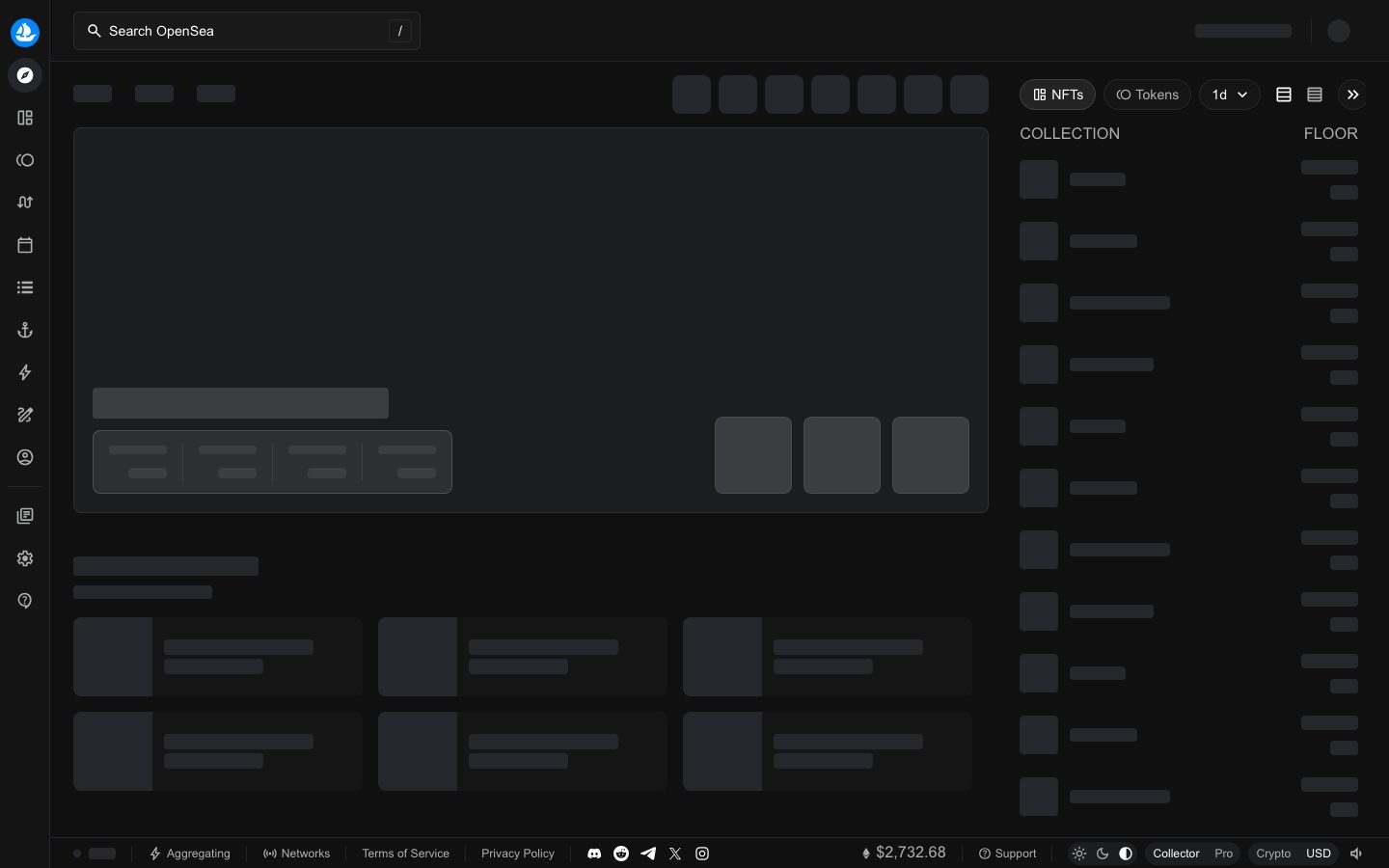 1 / 2
1 / 2The Story
OpenSea is a marketplace for non-fungible tokens. A seller lists an item by signing an order, and the transfer settles on-chain when a buyer accepts, which means the marketplace itself never holds the asset.
The product is organised around collections. A collection groups tokens that share a contract and a theme, and its page shows floor price, volume, and listed items. That structure is what makes a large set of individually distinct tokens navigable, and it is why the marketplace became the default place to look up a collection's activity.
The tradeoffs are the marketplace's and the asset's. Listing is free because it is only a signature, but settlement costs gas, and a listing can be bypassed if the same asset is sold elsewhere. Fees and royalty enforcement have changed repeatedly, which matters to creators whose income depended on secondary sales.
Overview
OpenSea's mechanism is a signed order: the seller authorises a sale, and the transfer happens on-chain when a buyer accepts.
Listing an item costs nothing because a listing is a signature rather than a transaction. When a buyer accepts, the transfer and the payment settle on-chain in one transaction. The marketplace is therefore a venue and an index rather than a custodian, which is why the asset never sits in an account controlled by the platform.
Collections are the organising structure. Tokens sharing a contract are grouped, and the collection page reports floor price, trading volume, and the items currently listed. That aggregation is what makes a set of thousands of individually distinct tokens navigable and comparable.
The constraints follow from the model. Settlement costs gas even though listing does not, and a listing on one venue does not prevent the same asset being sold on another, so an order can be bypassed. Marketplace fees and the enforcement of creator royalties have changed repeatedly, which matters to creators who counted on secondary sales.
Key Features
- Signed listings
Listing is a signature rather than a transaction, so it costs nothing until a sale settles.
- Collection pages
Tokens sharing a contract are grouped, with floor price and volume reported for the collection.
- On-chain settlement
The transfer and payment execute in one transaction, so the marketplace never takes custody.
- Marketplace APIs
Collection and order data are available through APIs, so other applications can build on the same index.
Where OpenSea is a strong choice, and where it is not
Choose OpenSea when you need a liquid venue to list or discover NFTs, and collection-level data is what you are looking for.
Look elsewhere if you need guaranteed royalty enforcement or a venue where a listing cannot be bypassed, since on-chain assets can be sold through any marketplace.
Getting started
Browsing is free; listing needs a wallet and a sale costs gas.
- ~5 minTime to first listing
Connect a wallet and sign a listing. Signing costs nothing until a sale settles.
- Fee + gasCost to start
A marketplace fee applies on a completed sale, plus network gas on settlement.
- A walletPrerequisites
A self-custody wallet holding the asset.
Known limitations
Constraints confirmed from the platform's documentation.
- A listing is not exclusive. Because the asset is on-chain, it can be sold through another marketplace.
- Settlement costs gas even though listing does not.
- Royalty enforcement has changed repeatedly. Creators counting on secondary income cannot rely on it.
- Collection data can be misleading. Floor price and volume are reported per collection and can be distorted by wash trading.
Pick OpenSea when you need a liquid NFT venue
Collection pages aggregate floor price and volume, which is what makes a large set of distinct tokens navigable.
The differentiator is the index and the liquidity, not the custody: the marketplace never holds the asset.
If guaranteed royalty enforcement matters, no on-chain marketplace can provide it, since the asset can be sold elsewhere.
FAQ
What is OpenSea?
OpenSea is a marketplace for NFTs where listings are signed orders and transfers settle on-chain.
Is listing free on OpenSea?
Listing is a signature rather than a transaction, so it costs nothing. Settlement on a sale costs gas.
What is a collection?
A group of tokens sharing a contract, presented with floor price and volume so a large set is navigable.
Can a listing be bypassed?
Yes. Because the asset is on-chain, it can be sold through another marketplace, so a listing is not exclusive.
What stack is OpenSea built with?
CompassPad records OpenSea as a TypeScript and React frontend with Go services and Solidity contracts, based on public documentation and job listings.
What we checked
- LIVESite and primary link
The marketing site resolved and the primary product link reached the application.
- PRICINGPricing page
The fee page resolved and lists a marketplace fee on sales plus network gas costs.
- DOCSDocumentation
Developer documentation is public and covers collections, orders, and the API.
- FRESHNESSChangelog
A dated public blog publishes updates and is reachable without an account.
Discussion
No comments yet. Be the first.
Join the conversation. Sign up to comment.
Sign up free