Screenshots
 1 / 2
1 / 2The Story
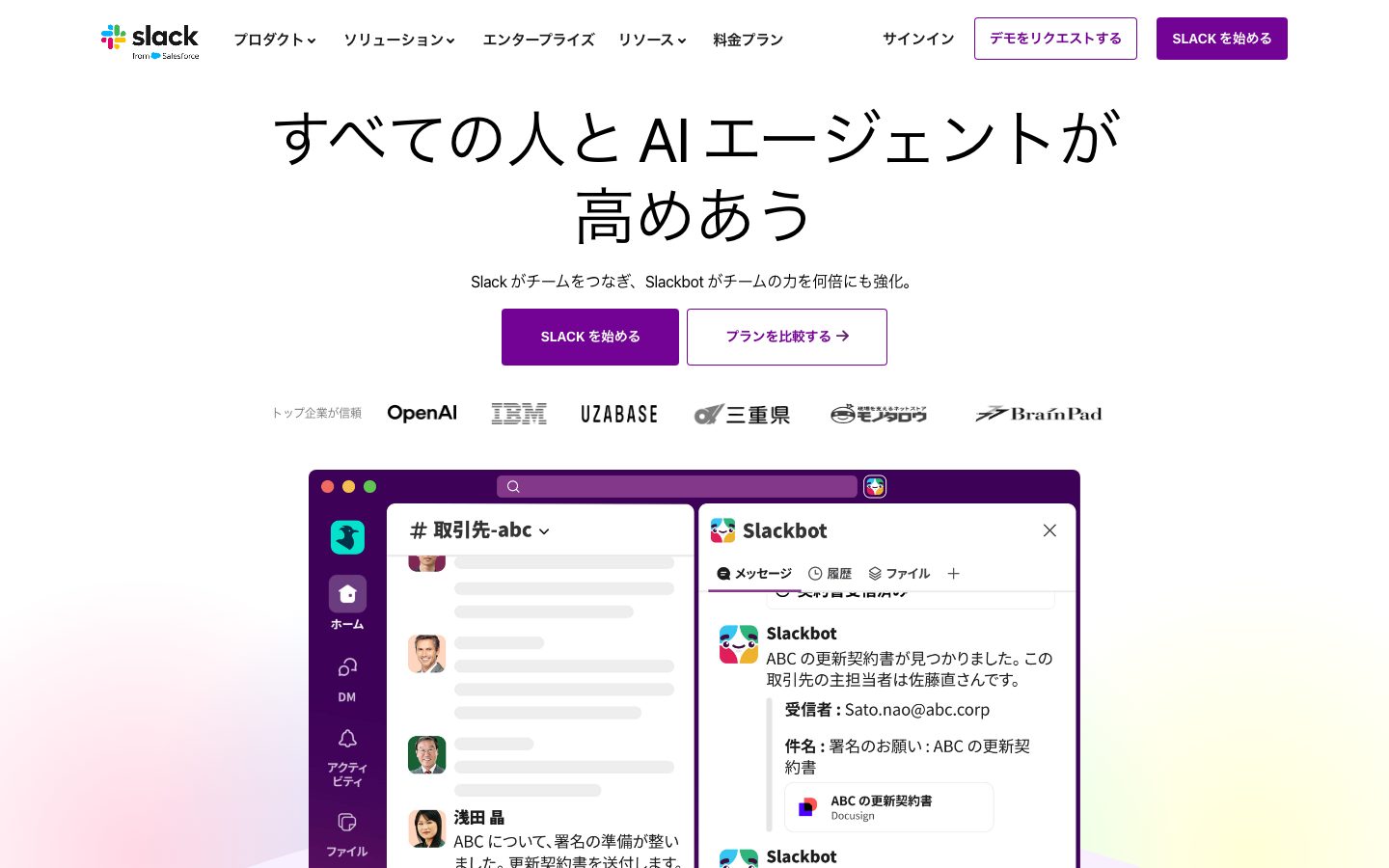
Slack is a messaging platform for organisations, organised around channels. A channel is a named conversation that can be public, private, or shared with an external organisation, and membership is a deliberate act rather than an accident of a contact list.
The structure is what distinguishes it from a group chat. Threads keep a reply attached to its parent, so a channel is not consumed by a side conversation. Search covers message history and files, and a shared channel lets two organisations work in the same space without exchanging accounts.
The platform's second half is the app directory and workflow builder. Incoming webhooks, slash commands, and bots let an external system post into a channel or accept a command from one, which is how alerts and approvals end up where a team already is. The cost is per-seat pricing and the fact that an organisation's conversation history lives in a vendor account.
Overview
Slack's organising decision is that conversation belongs to a topic people join, not to a pair of contacts.
A channel is a named space with a purpose, and joining one is explicit. That makes the membership of a conversation legible: a new team member can read the history of the channel they were added to, and a decision made months ago is findable by searching the channel it was made in.
Threads keep replies attached to their parent message, which is what prevents a channel from being consumed by a side discussion. Files shared in a channel stay in the same search index as the messages, and a shared channel lets two organisations work in one space without each maintaining accounts in the other's workspace.
The app platform is the other half of the product. Incoming webhooks, slash commands, and bots let an external service post into a channel or accept a command from one, which is how monitoring alerts, deployment notifications, and approval requests reach the people who act on them. The tradeoff is per-seat pricing and conversation history held in a vendor account.
Key Features
- Channels and threads
Conversation is organised by topic, and threads keep replies attached so a channel stays readable.
- Searchable history
Messages and files share one search index, so an old decision is findable by the channel it was made in.
- Shared external channels
Two organisations can work in one channel without each maintaining accounts in the other's workspace.
- App platform
Webhooks, slash commands, and bots let external systems post into a channel or accept a command from one.
Where Slack is a strong choice, and where it is not
Choose Slack when a team needs topic-organised conversation with searchable history and a way to bring alerts and approvals into the same place.
Look elsewhere if the priority is long-form documentation or a public community. Slack is a workplace messaging product, and reference material fits a wiki better than a channel.
Getting started
A workspace is usable immediately; the integration work is what makes it valuable.
- ~5 minTime to first channel
Create a workspace and a channel, and invite people. No setup is required.
- FreeCost to start
The free tier covers small teams with limited history. Paid plans are per seat.
- NothingPrerequisites
An email address. No infrastructure to run.
Known limitations
Constraints confirmed from the product's documentation.
- Free-tier history is limited. Older messages become inaccessible, which matters if the workspace is treated as a record.
- Per-seat pricing adds up. Cost scales with headcount rather than usage.
- Conversation history lives with the vendor. The organisation's messages are not on infrastructure it controls.
- Not a documentation tool. Long-form reference material fits a wiki better than a channel.
Pick Slack when alerts and approvals should land where people already are
The app platform is the differentiator: webhooks and bots bring external systems into the same place as the conversation.
Channels give conversation a topic and a membership, and search makes the history retrievable. Combined with integrations, it becomes the operational surface for a team.
If the priority is long-form documentation or a public community, a wiki or forum serves that better.
FAQ
What is Slack?
Slack is a workplace messaging platform organised into channels, with threads, search, and an app platform for integrations.
Is Slack free?
There is a free tier alongside per-seat paid plans. The free tier limits message history and some app features.
What is a shared channel?
A shared channel lets two organisations work in the same channel without each maintaining accounts in the other's workspace.
Can external systems post into Slack?
Yes. Incoming webhooks, slash commands, and bots let a service post into a channel or accept a command from one.
What stack is Slack built with?
CompassPad records Slack as a Java and Go backend with a React and TypeScript client, based on public engineering writing and job listings.
What we checked
- LIVESite and primary link
The marketing site resolved and the primary product link reached the application.
- PRICINGPricing page
The pricing page resolved and lists a free tier alongside per-seat paid plans.
- DOCSDocumentation
Help and API documentation are public and cover channels, threads, and app development.
- FRESHNESSChangelog
A dated public blog publishes updates and is reachable without an account.
Discussion
No comments yet. Be the first.
Join the conversation. Sign up to comment.
Sign up free