Plausible
Screenshots
 1 / 2
1 / 2The Story
Plausible is a web analytics tool that reports on traffic without cookies and without collecting personal data. The tracking script is small, and because no cookie is set, the product does not require the consent banner that cookie-based analytics trigger in many jurisdictions.
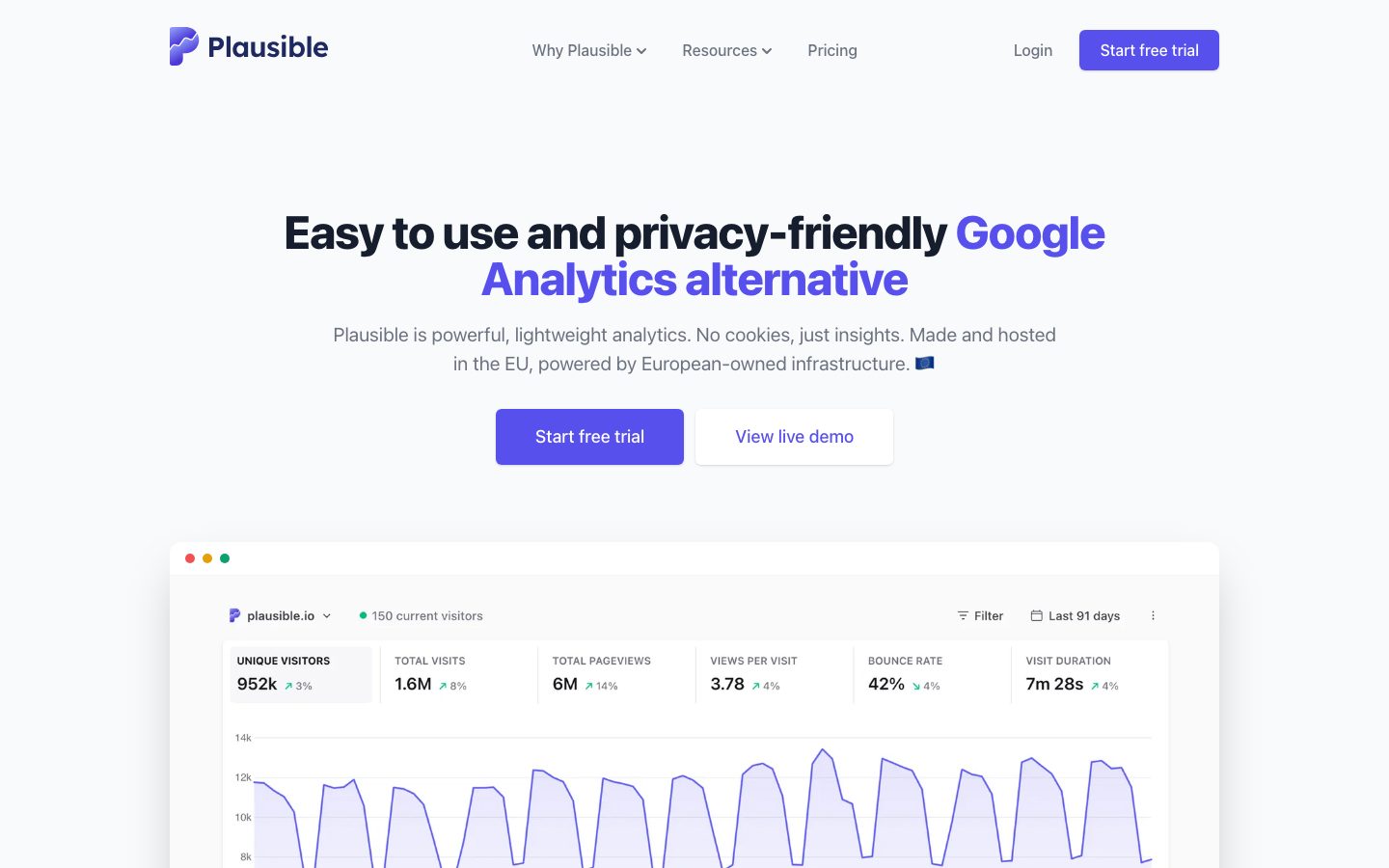
The interface is deliberately narrow. It reports page views, referrers, entry and exit pages, countries, devices, and goals, and it does not attempt to build user profiles or cross-site graphs. A site can publish its dashboard publicly, which some teams use as a transparency signal.
The product is open source and can be self-hosted, though the hosted service is the main commercial offering. It is a good fit for a site that needs to know which pages are read and where visitors arrive from; it is a poor fit for anyone who needs funnels, cohort retention, or per-user behavioural analysis, which is a different class of tool.
Overview
Plausible's scope is deliberately limited: it counts visits and sources, and it does not build a profile of the visitor.
The tracking script is small and sets no cookie. Because nothing persistent is stored on the device, the product generally falls outside the consent requirement that cookie-based analytics trigger, which removes a banner from the site and a source of dropped data.
The report set is narrow by design: page views, referrers, entry and exit pages, countries, devices, browsers, and custom goals. There is no cross-site graph, no user-level timeline, and no attempt to identify a returning person. A site can choose to publish its dashboard, which some teams use to show traction publicly.
The product is open source and can be self-hosted, and the hosted service is the main commercial offering. Teams that need funnels, cohort retention, or per-user behavioural analysis are looking at a different category of tool and will find Plausible too limited.
Key Features
- Cookie-free tracking
No cookie is set and no personal data is collected, which generally avoids the consent banner that cookie-based analytics require.
- Small tracking script
The script is a fraction of the size of a conventional analytics bundle, which keeps page weight down.
- Goals and funnels
Custom events track conversions such as sign-ups or purchases, and simple funnels show where visitors drop off.
- Public dashboards
A site can publish its dashboard so anyone can see traffic, which some teams use as a transparency signal.
Where Plausible is a strong choice, and where it is not
Choose Plausible when you need to know which pages are read and where visitors arrive from, and you would rather not run a consent banner or collect personal data.
Look elsewhere if you need cohort retention, per-user timelines, or behavioural analysis across sessions. Plausible deliberately does not build those reports, and a product analytics tool is the right category instead.
Getting started
The script is installed in minutes; the dashboard fills as traffic arrives.
- ~5 minTime to first pageview
Add one script tag to the site and visits appear in the dashboard immediately.
- FreeCost to start
The software is open source and free to self-host. Hosted plans are priced by monthly pageviews.
- A sitePrerequisites
A website to add the script to. Self-hosting needs a server and a database.
Known limitations
Constraints confirmed from the product's documentation.
- No cohort or per-user analysis. It reports on pages and sessions, not on individuals.
- Narrow report set. Funnels, retention, and behavioural analysis are not part of the product.
- Self-hosting is your responsibility. The application and its database are yours to run and upgrade.
- Goal tracking needs setup. Custom events have to be instrumented explicitly.
Pick Plausible when you want traffic numbers without a consent banner
It sets no cookies and collects no personal data, so it generally falls outside the consent requirement cookie-based analytics trigger.
The differentiator is the trade: a narrow report set in exchange for privacy compliance and a small script.
If you need cohort retention or per-user timelines, a product analytics tool is the right category and Plausible will feel too limited.
FAQ
What is Plausible?
Plausible is a lightweight web analytics tool that reports on traffic without cookies and without collecting personal data.
Is Plausible free?
The software is open source and free to self-host. The hosted service is priced by monthly pageviews.
Does Plausible need a cookie banner?
Because it sets no cookies and collects no personal data, it generally falls outside the consent requirement that cookie-based analytics trigger.
Can I self-host Plausible?
Yes. The source is available and can be run on your own infrastructure.
What stack is Plausible built with?
CompassPad records Plausible as an Elixir application with PostgreSQL, based on its public repository.
What we checked
- LIVESite and primary link
The marketing site resolved and the primary product link reached the application.
- PRICINGPricing page
The pricing page resolved and lists a free self-hosted option alongside paid hosted plans.
- DOCSDocumentation
Documentation is public and covers the script, goals, and self-hosting.
- FRESHNESSChangelog
A dated public blog is published and reachable without an account.
Discussion
No comments yet. Be the first.
Join the conversation. Sign up to comment.
Sign up free