
Substack
Screenshots
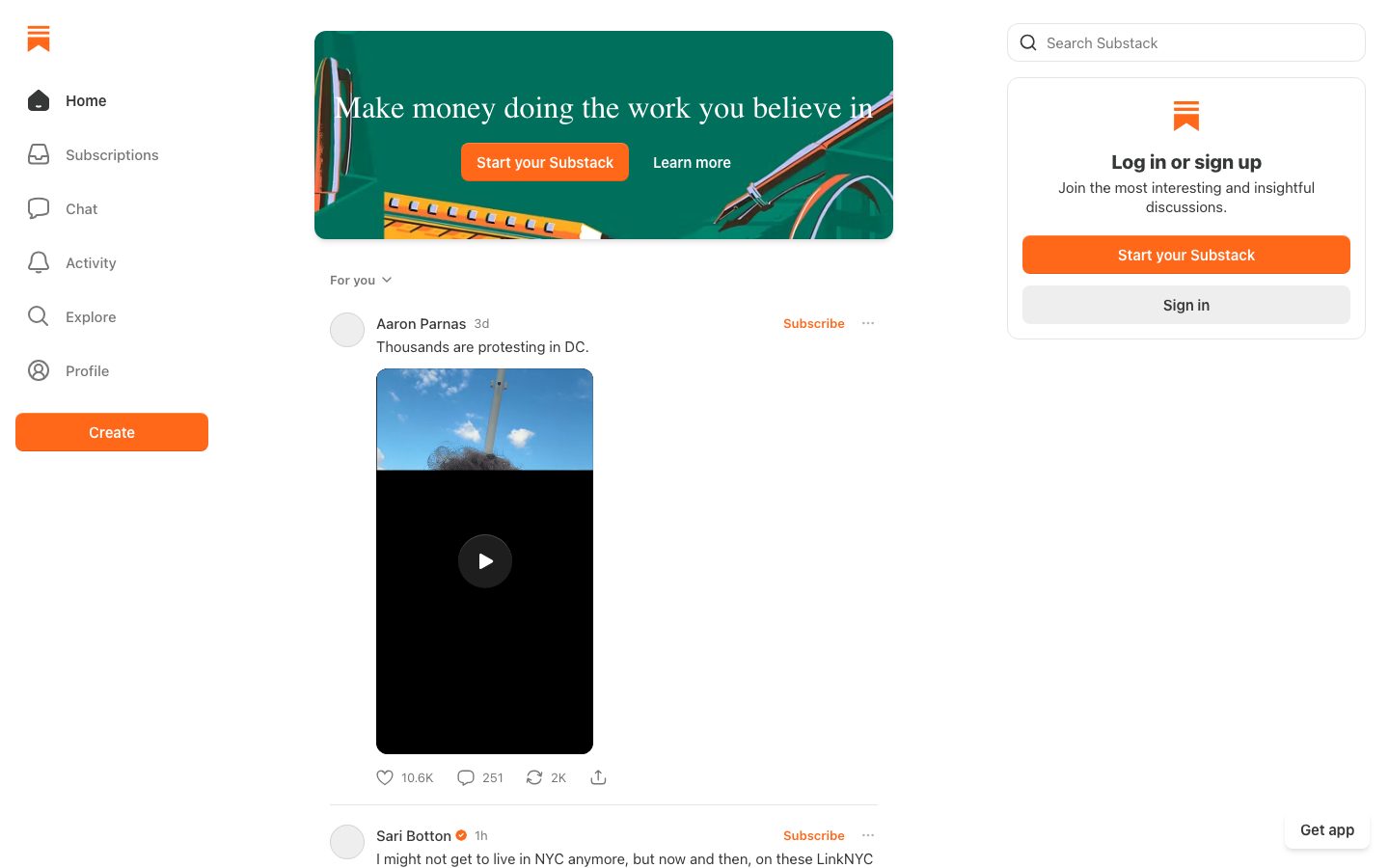 1 / 2
1 / 2The Story
Substack is a publishing platform where a writer can start a newsletter and charge for it. The platform handles the website, the email delivery, the payment, and the subscriber list, and it takes a cut of subscription revenue rather than charging a monthly fee.
The model is the reason it grew. A writer does not pay for software before earning anything: publishing is free and the platform's revenue comes from the subscriptions it processes. Paid and free subscribers can be on the same list, and a post can be public, free to subscribers, or paid-only.
The tradeoff is control and portability. The audience lives on Substack's network, the design is largely fixed, and the platform's recommendations surface other writers to your subscribers. Writers who want a custom domain, their own design, and an exportable list sometimes move to self-hosted publishing software.
Overview
Substack's commercial model is aligned with the writer's: the platform earns when a subscription is sold, not when software is bought.
A writer starts a publication at no cost. The platform provides the website, the email delivery, the subscriber list, and the payment processing, and it takes a percentage of subscription revenue. Because there is no upfront software cost, publishing a first post requires no financial decision.
Free and paid subscribers share one list, and each post can be public, free to subscribers, or paid-only. That lets a writer build an audience before introducing a paywall, and it lets a paywall apply to some posts rather than all of them.
The tradeoff is control. The audience lives on the platform's network, the design is largely fixed, and the recommendation system surfaces other writers to your subscribers. Writers who want a custom domain, a bespoke design, and a portable list sometimes move to self-hosted publishing software once the audience is established.
Key Features
- Free publishing
Starting a publication costs nothing, and the platform earns from subscriptions rather than a software fee.
- Paid subscriptions
Payment, recurring billing, and subscriber management are handled by the platform.
- Mixed free and paid posts
Each post can be public, free to subscribers, or paid-only, so a paywall can be introduced gradually.
- Built-in discovery
A recommendation network surfaces publications to readers, which is a distribution channel a self-hosted site lacks.
Where Substack is a strong choice, and where it is not
Choose Substack when the goal is to start publishing and charging for subscriptions without paying for software first, and the built-in discovery is useful.
Look elsewhere if the publication needs a custom domain with full design control and a portable subscriber list. Self-hosted publishing software offers that at the cost of running it.
Getting started
Publishing the first post takes minutes; growing the list is the ongoing work.
- ~10 minTime to first post
Create a publication, write, and send. No site setup or hosting is involved.
- FreeCost to start
Publishing is free. The platform takes a percentage of paid subscription revenue.
- NothingPrerequisites
An account. Payment details only if you charge for subscriptions.
Known limitations
Constraints confirmed from the platform's documentation.
- The audience lives on the platform. The subscriber list is not portable in the way a self-hosted list is.
- Design control is limited. The publication's appearance is largely defined by the platform.
- Recommendations surface other writers to your subscribers, which is a growth channel and a distraction.
- Revenue share applies. The platform takes a percentage of subscriptions rather than a flat fee.
Pick Substack when you want to start publishing without paying first
The commercial model is aligned with the writer: the platform earns when a subscription sells, not when software is bought.
That removes the upfront cost of publishing and makes the first post a zero-risk decision.
If the publication needs a custom domain, full design control, and a portable list, self-hosted publishing software offers that at the cost of running it.
FAQ
What is Substack?
Substack is a publishing platform where writers can start a newsletter and charge for subscriptions, with the platform handling delivery and payment.
Is Substack free?
Publishing is free. The platform takes a percentage of paid subscription revenue rather than charging a monthly fee.
Can I have free and paid readers?
Yes. Free and paid subscribers share one list, and each post can be public, free to subscribers, or paid-only.
Can I use my own domain?
Custom domains are supported, though the design and structure are largely defined by the platform.
What stack is Substack built with?
CompassPad records Substack as a TypeScript and Node.js platform, based on public documentation and job listings.
What we checked
- LIVESite and primary link
The marketing site resolved and the primary product link reached the application.
- PRICINGPricing page
There is no monthly software fee; the platform takes a percentage of subscription revenue.
- DOCSDocumentation
Support documentation is public and covers publishing, subscriptions, and payments.
- FRESHNESSChangelog
A dated public blog publishes updates and is reachable without an account.
Discussion
No comments yet. Be the first.
Join the conversation. Sign up to comment.
Sign up free