

Screenshots
 1 / 2
1 / 2The Story
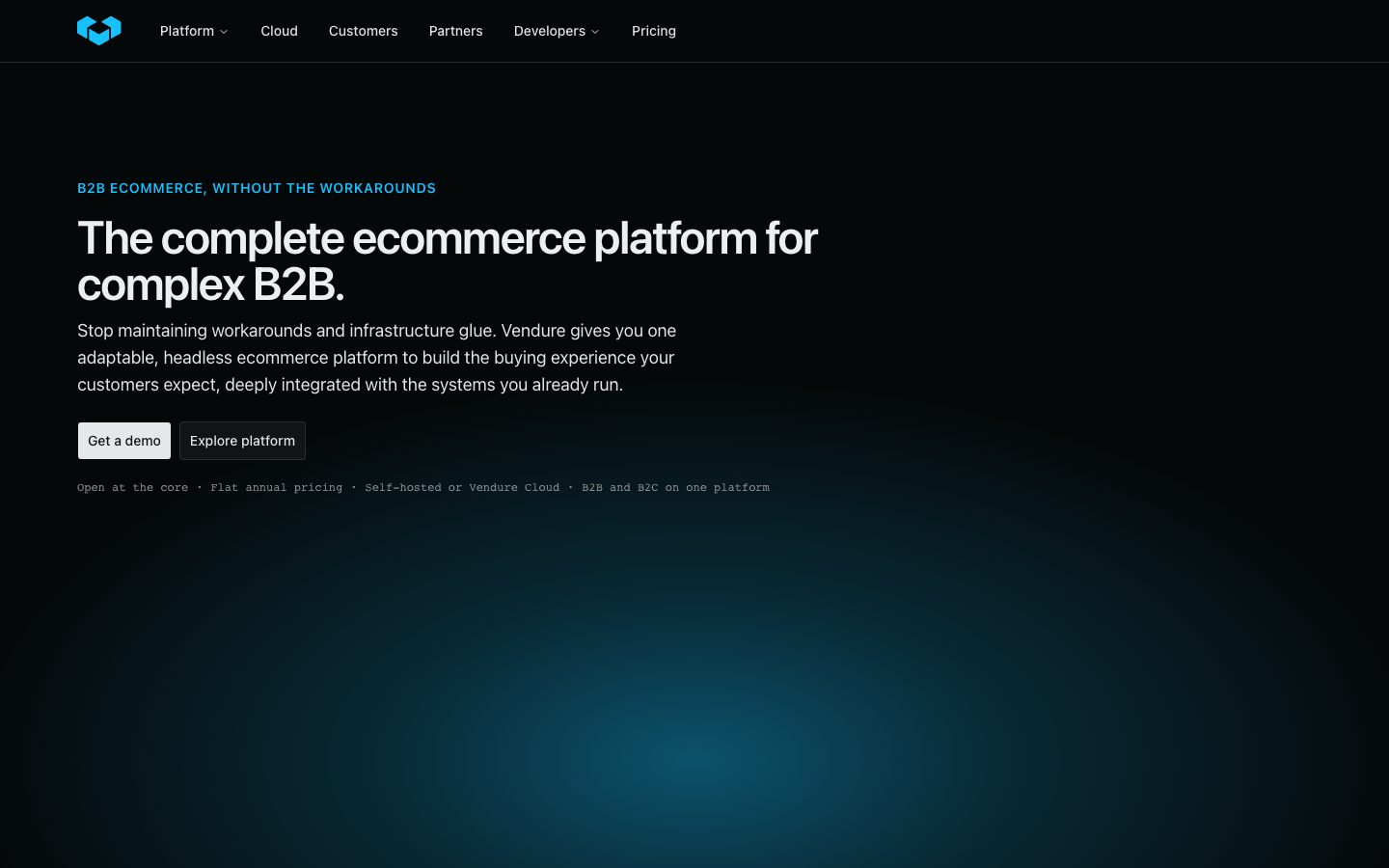
Vendure is a headless commerce framework for TypeScript teams. It is built on NestJS with a GraphQL API, and its plugin system is the same module system the framework itself uses, so extending it means writing a NestJS module rather than working around a closed extension point.
The commerce domain covers products with variants and facets, carts and checkout, orders, payments, promotions, and multi-channel selling. The admin dashboard is an Angular application that consumes the same API and can be extended with custom UI components.
Vendure is a framework rather than a hosted product. A project owns the deployment and the storefront, and upgrades require attention because the plugin API is part of the application. It fits teams already invested in TypeScript and NestJS who want commerce primitives they can shape in code.
Overview
Vendure's extension model is the framework's own: a plugin is a NestJS module, so there is no separate plugin API to learn or work around.
The commerce domain is modelled in TypeScript: products with variants and facets for filtering, carts and checkout, orders, payments, promotions, and channels that scope pricing and availability. A GraphQL API exposes it to the storefront, and the admin dashboard is a client of the same API.
Because the plugin system is the framework's module system, an extension can inject services, add GraphQL resolvers, subscribe to events, and contribute admin UI components. That uniformity is the reason teams already working in NestJS find the extension path short.
The tradeoff is that this is a framework, not a service. The project owns the deployment, the storefront, and the upgrade path, and because plugins are compiled into the application, a major version change needs review. It suits teams with TypeScript depth who want to shape the commerce layer directly.
Key Features
- NestJS plugin system
Plugins are NestJS modules that can inject services, add resolvers, and contribute admin components.
- GraphQL commerce API
The catalogue, cart, order, and payment domain is exposed through a GraphQL API for any frontend.
- Faceted product search
Facets model product attributes so filtering and search can be built over the catalogue.
- Multi-channel pricing
Channels scope currency, pricing, and availability so one catalogue serves several storefronts.
Where Vendure is a strong choice, and where it is not
Choose Vendure when the team already builds on TypeScript and NestJS and wants commerce primitives they can extend with the same module patterns they use elsewhere.
Look elsewhere if the team wants a managed service or a storefront out of the box. Vendure is a framework, so hosting, the frontend, and upgrades are the project's responsibility.
Getting started
The backend starts quickly; the storefront and plugins are the work.
- ~30 minTime to running backend
Scaffold a project and the GraphQL API and admin panel start locally.
- FreeCost to start
Self-hosted and free. Paid support and cloud options exist.
- Node + PostgresPrerequisites
Node.js and Postgres. A storefront is built separately.
Known limitations
Constraints confirmed from the project's documentation.
- A framework, not a service. Hosting, the storefront, and upgrades are the project's responsibility.
- Plugins compile into the app. A major version change requires reviewing your customisations.
- No storefront included. It is headless.
- Smaller ecosystem than the established commerce platforms.
Pick Vendure when your team already builds on NestJS
The plugin system is the framework's own module system, so extending it uses the patterns the team already knows.
That uniformity shortens the extension path considerably compared with a platform where plugins are a separate API to learn.
If you want a managed service or a storefront out of the box, a hosted platform is the better starting point.
FAQ
What is Vendure?
Vendure is an open-source headless commerce framework for TypeScript, built on NestJS with a GraphQL API.
Is Vendure free?
The core is open source and free to self-host. Paid support and cloud options are available.
How do Vendure plugins work?
A plugin is a NestJS module, so it uses the same injection, resolver, and event patterns as the framework itself.
Does Vendure include a storefront?
No. It is headless, so the storefront is built separately against the GraphQL API.
What stack is Vendure built with?
CompassPad records Vendure as a TypeScript and NestJS backend with PostgreSQL, based on its public repository.
What we checked
- LIVESite and primary link
The marketing site resolved and the primary product link reached the application.
- PRICINGPricing page
The pricing page resolved and lists a free open-source edition alongside paid support and cloud options.
- DOCSDocumentation
Documentation is public and covers the architecture, plugin system, and GraphQL API.
- FRESHNESSChangelog
A dated public blog publishes releases and is reachable without an account.
Discussion
No comments yet. Be the first.
Join the conversation. Sign up to comment.
Sign up free