

Screenshots
 1 / 2
1 / 2The Story
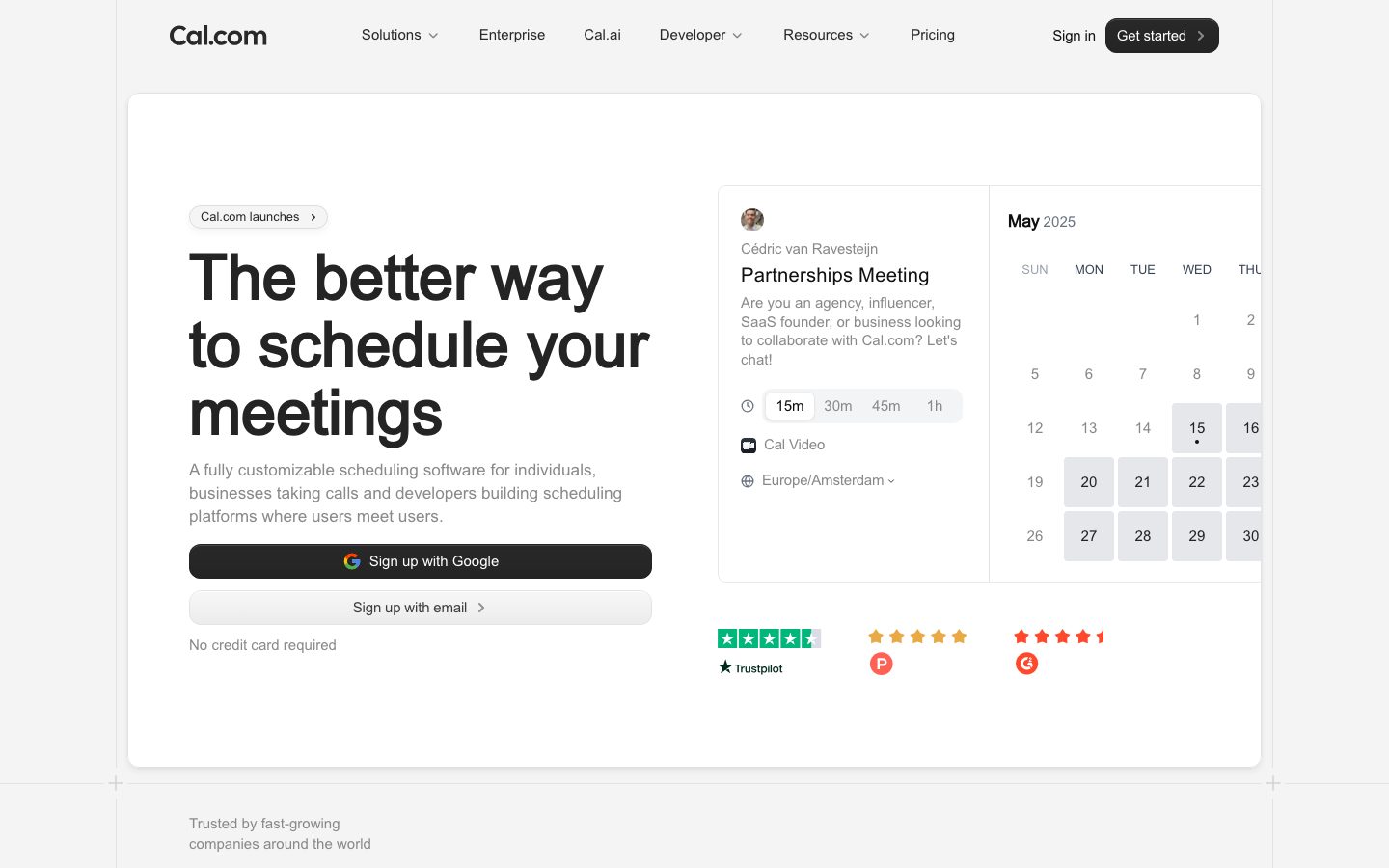
Cal.com is a scheduling tool in the category that Calendly defined: a bookable link that reads a calendar's availability and writes an event when someone books. It is open source, which is the main difference, and it can be self-hosted so booking data stays on your own infrastructure.
The product supports the expected scheduling features: multiple event types, buffers, minimum notice, round-robin distribution across a team, and routing forms that send a booker to the right event based on their answers. It connects to Google, Microsoft, and Apple calendars for availability and to conferencing tools for meeting links.
Self-hosting is the reason many teams choose it, and also the main cost. Running the platform means operating a Postgres database, the application, and its background jobs, plus keeping up with releases. Teams that want scheduling to be someone else's operational problem use the hosted plan instead.
Overview
Cal.com covers the familiar bookable-link workflow and adds two things a closed tool does not offer: source access and self-hosting.
The core flow is the one the category established. A user publishes an event type with a duration and availability rules, and a booker picks a slot from a page that reflects the host's real calendar. Buffers, minimum notice, and daily limits constrain what is offered. Bookings write an event to the connected calendar and generate a conferencing link.
Team features extend that to a group. Round-robin distributes bookings across members, collective events require several people at once, and routing forms send a booker to the appropriate event based on their answers. This is the part that turns the tool from a personal link into something a sales or support team can run on.
Because the product is open source, it can be self-hosted. That keeps booking data on your own infrastructure, which is the deciding factor for some organisations. The cost is operational: a Postgres database, the application, and background jobs have to be run and kept current with releases.
Key Features
- Bookable event types
Each event type carries its own duration, availability, buffers, and notice period, and reads the host's real calendar.
- Team round-robin
Bookings distribute across team members by availability, which is how a sales or support queue is run on the tool.
- Routing forms
A form sends a booker to the right event based on their answers, so qualification happens before the meeting is booked.
- Self-hostable
The platform is open source and can run on your own infrastructure, keeping booking data inside the network.
Where Cal.com is a strong choice, and where it is not
Choose Cal.com when you want standard scheduling features but need source access, self-hosting, or white-labelling that a closed scheduling service does not offer.
Look elsewhere if scheduling should be a zero-maintenance purchase. Self-hosting means running a database and keeping up with releases, and the hosted plan is the alternative to that work.
Getting started
A bookable link works in minutes; self-hosting is a separate project.
- ~10 minTime to first booking
Connect a calendar, define an event type, and share the link.
- FreeCost to start
The free tier covers individual use. Paid plans add teams and routing.
- A calendarPrerequisites
A Google, Microsoft, or Apple calendar to read availability from.
Known limitations
Constraints confirmed from the project's documentation.
- Self-hosting is a real commitment. Postgres, the application, and background jobs are yours to run and upgrade.
- Calendar sync is not instant. Availability depends on the provider's API, so a just-booked slot can briefly appear free.
- Round-robin needs configuration. Team distribution rules take thought before they behave as expected.
- Not a meeting product. There is no built-in video; conferencing is delegated to an integration.
Pick Cal.com when scheduling should be infrastructure you control
It covers the familiar bookable-link workflow and adds source access and self-hosting, which a closed tool cannot offer.
The differentiator is control: the booking data can stay on your own infrastructure and the interface can be white-labelled.
If you want scheduling to be a zero-maintenance purchase, the hosted plan is the alternative to running it yourself.
FAQ
What is Cal.com?
Cal.com is open-source scheduling software that provides bookable links, team round-robin, and routing forms, hosted or self-hosted.
Is Cal.com free?
Cal.com lists a free tier alongside per-seat paid plans, and the core is open source and self-hostable.
Can I self-host Cal.com?
Yes. The platform is open source and can run on your own infrastructure, though you operate the database and background jobs.
Does Cal.com support teams?
Yes. Round-robin distributes bookings across members, and collective events require several people at once.
What stack is Cal.com built with?
CompassPad records Cal.com as a Next.js and TypeScript application with PostgreSQL, based on its public repository.
What we checked
- LIVESite and primary link
The marketing site resolved and the primary product link reached the application.
- PRICINGPricing page
The pricing page resolved and lists a free tier alongside per-seat paid plans.
- DOCSDocumentation
Documentation is public and covers event types, teams, routing forms, and self-hosting.
- FRESHNESSChangelog
A dated public blog publishes releases and is reachable without an account.
Discussion
No comments yet. Be the first.
Join the conversation. Sign up to comment.
Sign up free