
Screenshots
 1 / 2
1 / 2The Story
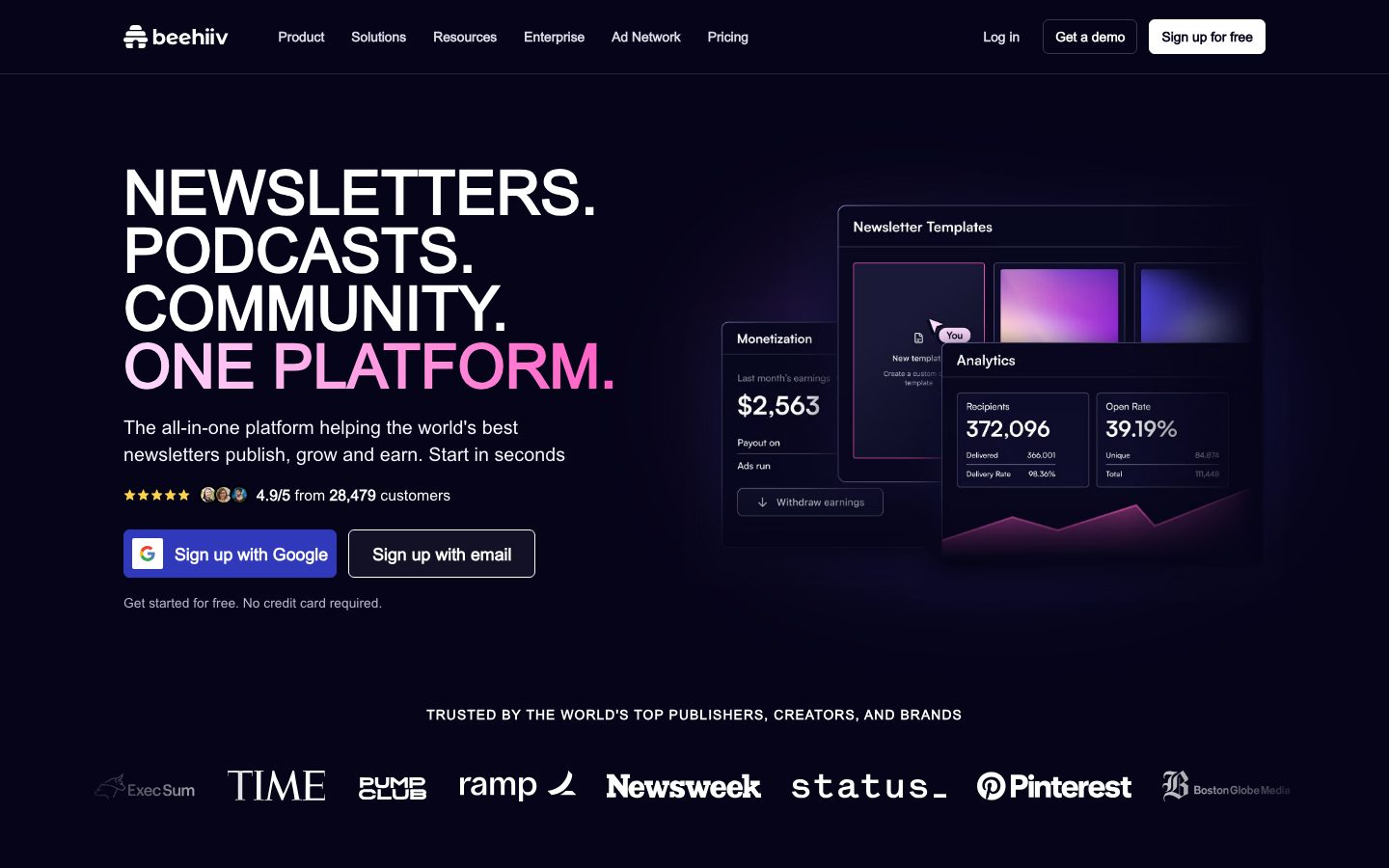
Beehiiv is a newsletter platform built for operators rather than only writers. Publishing and delivery are the baseline; the product's emphasis is on the growth side, with referral programmes, recommendation networks, and paid subscription tiers built in.
The referral mechanic is the notable feature. A publication can offer rewards for subscribers who bring in others, and the platform tracks the resulting attribution, which turns the audience into a distribution channel. An ad network connects publications with sponsors, so a free newsletter can earn without introducing a paywall.
The platform is hosted and subscription-priced, with a free tier that carries the platform's branding. It suits a publication that intends to grow an audience deliberately; a writer who only wants to send email to a list will find the growth machinery unnecessary.
Overview
Beehiiv assumes a newsletter is a business, so the tools for growing and monetising an audience ship with the publishing product.
Publishing and delivery are the baseline: write a post, send it to the list, and host an archive. What distinguishes the platform is what surrounds that. Subscriber referral programmes let a publication reward readers who bring in others, with attribution tracked by the platform, which makes the existing audience a distribution channel rather than only a recipient list.
Monetisation has two paths. Paid subscription tiers are handled by the platform, and an ad network connects publications with sponsors so a free newsletter can earn without a paywall. Recommendations surface other publications to your subscribers, which is a growth channel that a self-hosted newsletter lacks.
The platform is hosted and subscription-priced, with a free tier that carries the platform's branding. It suits a publication that intends to grow deliberately; a writer who only needs to send email to a list will find the growth machinery unnecessary.
Key Features
- Referral programmes
Readers are rewarded for bringing in subscribers, with attribution tracked by the platform.
- Paid subscription tiers
Payment and recurring billing for paid subscribers are handled by the platform.
- Ad network
Sponsors are matched with publications, so a free newsletter can earn without a paywall.
- Recommendation network
Publications surface each other to subscribers, which is a distribution channel a self-hosted list lacks.
Where Beehiiv is a strong choice, and where it is not
Choose Beehiiv when the newsletter is intended to grow into a business and referral, recommendation, and sponsorship tools are worth more than a minimal sending service.
Look elsewhere if the requirement is simply to send email to a list, or if the publication must be fully self-hosted with a portable subscriber base.
Getting started
A publication is live in minutes; growth tools need an audience to act on.
- ~15 minTime to first send
Create a publication, import or add subscribers, and send. Delivery is handled by the platform.
- FreeCost to start
The free tier carries platform branding. Paid plans remove it and unlock growth features.
- NothingPrerequisites
An account. A custom domain needs DNS access.
Known limitations
Constraints confirmed from the platform's documentation.
- Free tier carries platform branding. Removing it requires a paid plan.
- Subscriber list lives with the platform. Portability is limited compared with a self-hosted list.
- Growth tools need an existing audience. Referral programmes do nothing without readers to refer.
- Ad network takes a share. Sponsorship revenue is shared with the platform.
Pick Beehiiv when the newsletter is meant to become a business
Referral programmes, a recommendation network, and a sponsor marketplace are built in rather than assembled.
The differentiator is that growth is treated as a first-class feature, not an afterthought to publishing.
If you only need to send email to a list, or the publication must be fully self-hosted, a simpler tool is the better fit.
FAQ
What is Beehiiv?
Beehiiv is a newsletter platform with publishing, referral programmes, recommendation networks, paid tiers, and an ad marketplace.
Is Beehiiv free?
There is a free tier that carries the platform's branding alongside paid subscription plans.
How do referrals work?
A publication rewards subscribers who bring in others, and the platform tracks the resulting attribution.
Can a free newsletter earn money?
Yes. The ad network connects publications with sponsors, so revenue does not require a paywall.
What stack is Beehiiv built with?
CompassPad records Beehiiv as a TypeScript and Node.js platform with PostgreSQL, based on public documentation and job listings.
What we checked
- LIVESite and primary link
The marketing site resolved and the primary product link reached the application.
- PRICINGPricing page
The pricing page resolved and lists a free tier alongside paid subscription plans.
- DOCSDocumentation
Support documentation is public and covers publishing, referrals, and monetisation.
- FRESHNESSChangelog
A dated public blog publishes updates and is reachable without an account.
Discussion
No comments yet. Be the first.
Join the conversation. Sign up to comment.
Sign up free