

Screenshots
 1 / 2
1 / 2The Story
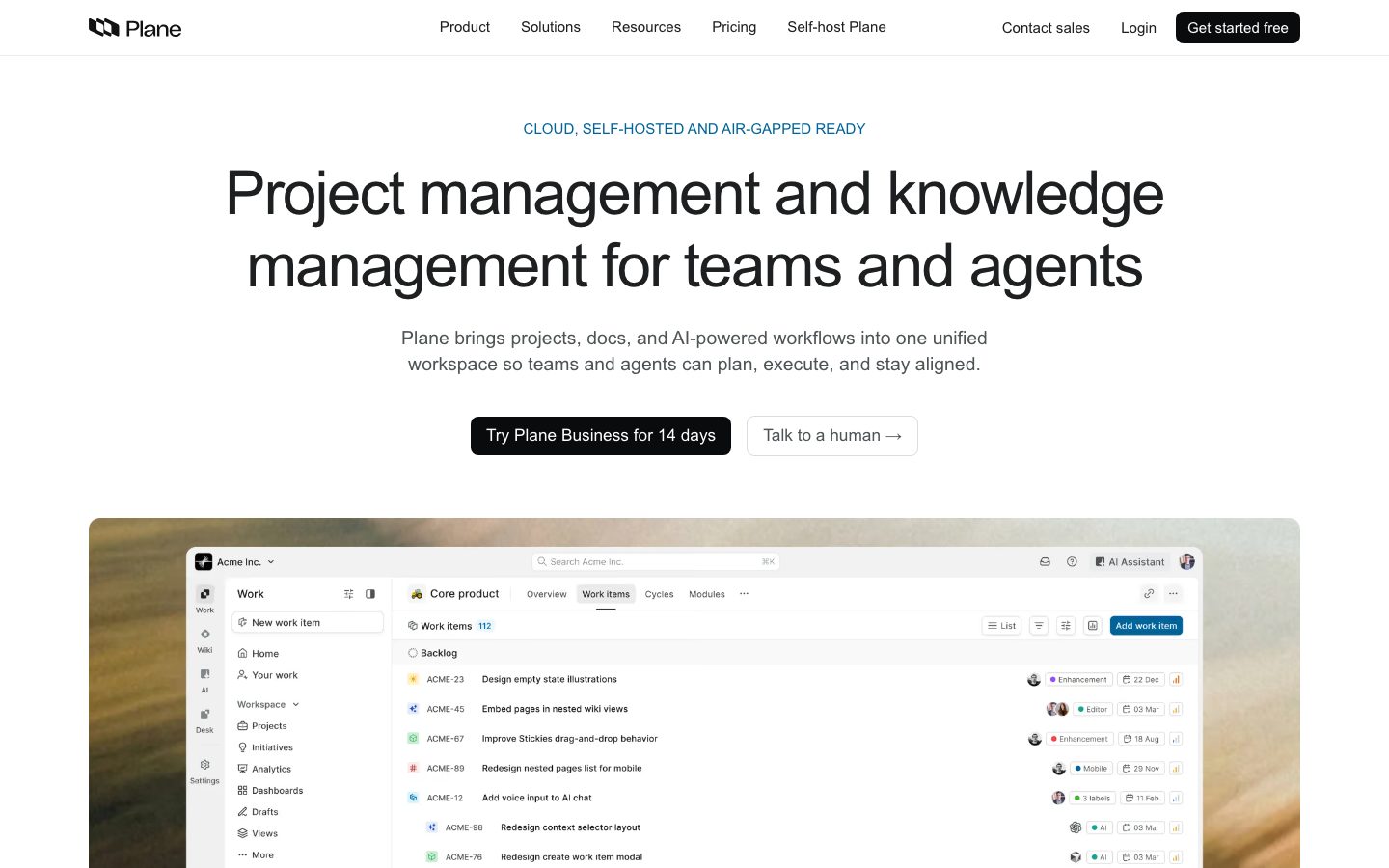
Plane is a project management tool in the issue-tracker category, positioned as an open-source alternative that can be self-hosted. It covers the familiar surfaces: issues, cycles, modules, and views, with a project structure on top.
The differentiator is deployment. The product ships as a hosted service and as a self-hostable deployment, and the source is published. Teams that need their project data on their own infrastructure can run it, at the cost of operating it.
Plane's model adds modules alongside cycles. A cycle is a timebox; a module is a grouping of issues by theme that can span cycles. Views are saved filters that can be shared across a project, which is how a team keeps a consistent board without rebuilding it per person.
Overview
Plane targets teams that want a familiar tracker without giving up control of the deployment.
Issues are the base record and belong to a project. They move through states the project defines, and can be assigned, labeled, and linked to each other.
Two grouping mechanisms sit above the issue. A cycle is a timebox, like a sprint. A module groups issues by theme and can span cycles, which suits work that does not fit a single timebox.
Views are saved filters with a chosen layout. Because a view is shared rather than personal, a team can agree on one board and one backlog definition instead of maintaining parallel copies.
Key Features
- Self-hostable
The product can run on your own infrastructure from the published source.
- Cycles and modules
Timeboxed cycles and thematic modules group work two different ways.
- Shared saved views
Views are saved filters that a team shares, so the board definition lives in one place.
- Open-source core
The source is published in a public repository with a license file.
Where Plane is a strong choice, and where it is not
Choose Plane if you want an issue tracker you can run yourself, or if your organization requires project data to stay on its own infrastructure.
Look elsewhere if you want a fully managed service with no operational burden, or if you need deep integrations that only a larger ecosystem provides.
Getting started
A workspace is usable immediately; self-hosting is where the real setup time goes.
- ~10 minTime to first issue
Create a workspace and a project. The default workflow is usable without configuration.
- FreeCost to start
The cloud free tier covers small teams. Self-hosting is free but you run it.
- Docker for self-hostPrerequisites
Nothing for the hosted version. Self-hosting needs Docker and a database.
Known limitations
Constraints confirmed from the project's documentation.
- Self-hosting is a real operational commitment. Upgrades, backups, and the database are yours to manage.
- Narrower integration set than the market leader. A workflow built on a specific integration may need a workaround.
- Younger product. Fewer years of hardening than the established trackers.
- Mobile experience is less developed than the web application.
Pick Plane if you want an open-source tracker you can host
It is the option for a team that wants the tracker to be self-hostable and inspectable, and accepts a smaller ecosystem to get that.
The differentiator is control: the source is available and the product can run on your own infrastructure.
If you want the largest integration ecosystem and do not care about self-hosting, the market leader is the safer choice.
FAQ
What is Plane?
Plane is an open-source project and issue tracking tool available as a hosted service or a self-hosted deployment.
Is Plane open source?
Yes. The source is published in a public repository with a license file. Check the repository for current license terms.
Can I self-host Plane?
Yes. Self-hosting is supported, and the operator becomes responsible for upgrades, backups, and security.
Is Plane free?
Plane lists a free tier alongside paid plans. Check the pricing page for current limits.
What stack is Plane built with?
CompassPad records Plane as a Django and Python backend with a React and TypeScript front end on PostgreSQL, based on the public repository.
What we checked
- LIVESite and primary link
The marketing site resolved and the primary product link reached the product itself.
- PRICINGPricing page
The pricing page resolved and lists the current plans and limits.
- DOCSDocumentation
Public documentation resolved and covers the product's core surfaces.
- SOURCESource page
The linked source page resolved and is reachable without an account.
Discussion
No comments yet. Be the first.
Join the conversation. Sign up to comment.
Sign up free