

Screenshots
The Story
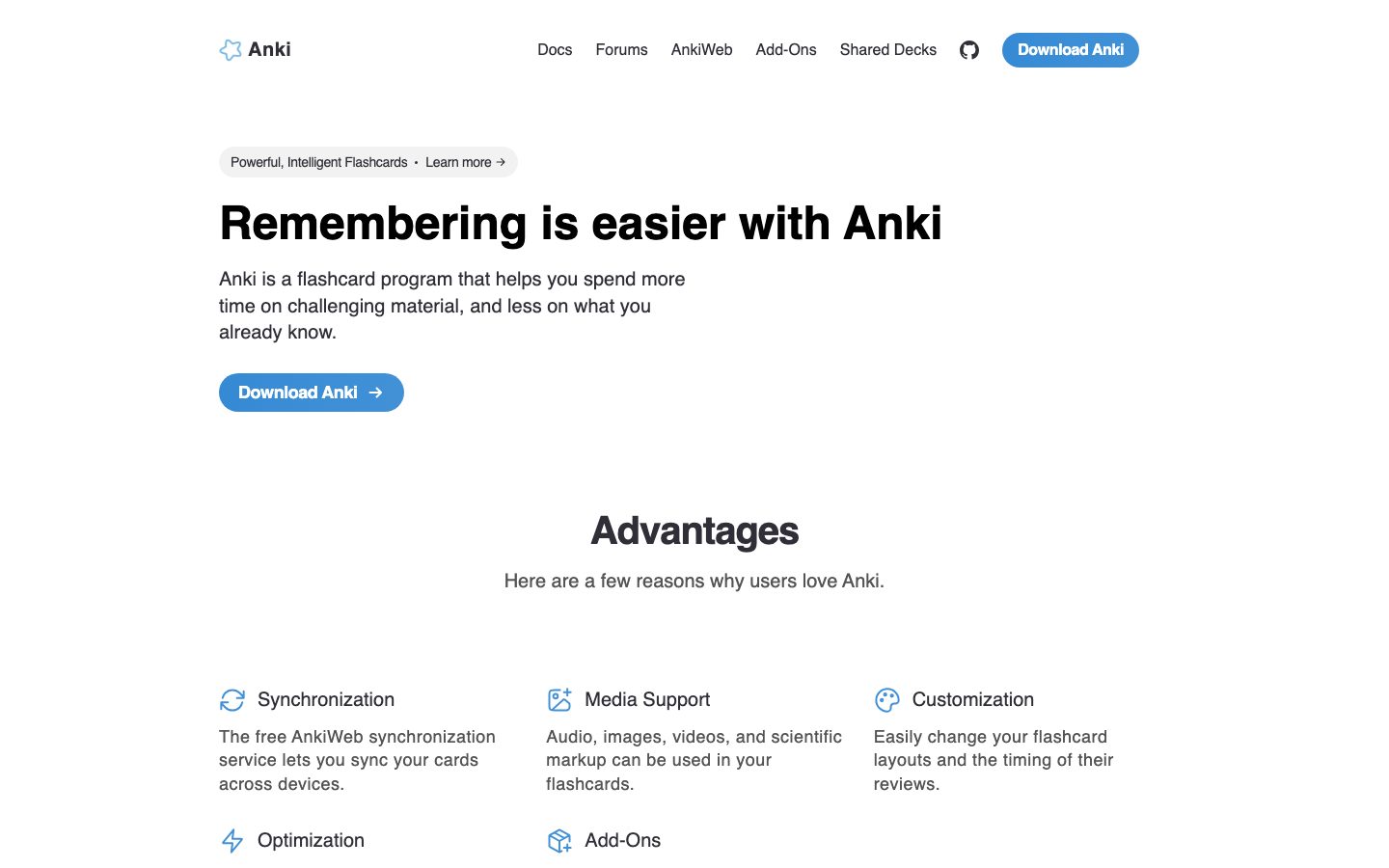
Anki is a flashcard application built on spaced repetition. A card has a front and a back, and after each review the learner rates how difficult the recall was. That rating determines when the card is shown again, so material that is easy is seen rarely and material that is hard is seen often.
The scheduling algorithm is the product. Decks are user-created, and the shared deck library means a learner can start from someone else's deck for a standard subject. Because the algorithm is open and the file format is documented, decks can be generated programmatically from other data.
The interface is functional rather than polished, and creating good cards is work: a poorly written card produces poor recall no matter how good the schedule is. The application is free on desktop and Android, with a paid iOS client that funds development, and synchronisation runs through a free account.
Overview
Anki's value is the review scheduler, which decides when each card should be seen again based on how it was recalled.
A card has a front and a back, and after each review the learner rates the recall. That rating feeds the scheduler, which sets the next interval. Cards recalled easily are pushed far into the future; cards that were hard come back soon. Over time the deck converges on the material the learner actually struggles with.
Decks are user-created, and a shared library lets a learner start from an existing deck for a standard subject such as a language vocabulary list or a medical exam. The file format is documented and the algorithm is open, so decks can also be generated from other data with a script.
The interface is functional rather than polished, and card quality matters more than the tool: a badly written card produces unreliable recall regardless of the schedule. The desktop and Android clients are free, the iOS client is paid and funds development, and synchronisation runs through a free account.
Key Features
- Spaced-repetition scheduling
Each review rating sets the next interval, so effort concentrates on material that is actually hard.
- Shared deck library
Existing decks for standard subjects can be downloaded rather than built from scratch.
- Cross-device sync
A free account synchronises decks and review history across desktop, mobile, and web.
- Documented file format
The deck format is documented, so cards can be generated programmatically from other sources.
Where Anki is a strong choice, and where it is not
Choose Anki when the material is factual and needs to be retained long-term, and you are willing to invest in writing good cards.
Look elsewhere if the material requires understanding rather than recall, or if you want a polished interface and curated content. Anki provides the scheduler and expects the learner to supply the cards.
Getting started
The app works immediately; writing good cards is the real work.
- ~10 minTime to first review
Install, create a deck, and add a card. Existing shared decks can be downloaded instead.
- FreeCost to start
Free on desktop, web, and Android. The iOS client is a one-time purchase.
- NothingPrerequisites
The desktop or mobile app. Sync needs a free account.
Known limitations
Constraints confirmed from the project's documentation.
- Card quality determines everything. A badly written card produces unreliable recall regardless of the schedule.
- Interface is functional rather than polished. It is a tool, not a designed consumer product.
- iOS client is paid. It is a one-time purchase that funds development.
- Review load compounds. Cards added faster than they are learned create a backlog that grows.
Pick Anki when material must be retained long-term
The scheduler is the product: each review rating sets the next interval, so effort concentrates on what is actually hard.
That makes it effective for vocabulary, anatomy, and any factual material that has to stay available months later.
If the material requires understanding rather than recall, or you want curated content and a polished interface, a different tool fits.
FAQ
What is Anki?
Anki is a flashcard application that uses spaced repetition to schedule reviews based on how well each card was recalled.
Is Anki free?
The desktop, web, and Android clients are free. The iOS client is a one-time paid purchase that funds development.
Can I download existing decks?
Yes. A shared deck library covers many standard subjects, including language vocabulary and exam preparation.
Does Anki sync between devices?
Yes. A free account synchronises decks and review history across devices.
What stack is Anki built with?
CompassPad records Anki as a Python and Rust application with a TypeScript web client, based on its public repository.
What we checked
- LIVESite and primary link
The marketing site resolved and the primary product link reached the application.
- PRICINGPricing page
The desktop and Android clients are free; the iOS client is a one-time paid purchase.
- DOCSDocumentation
Documentation is public and covers deck options, syncing, and card templates.
- FRESHNESSChangelog
Dated releases are published on a public page and are reachable without an account.
Discussion
No comments yet. Be the first.
Join the conversation. Sign up to comment.
Sign up free

